
What would New York look like if it were built for artists, and by them?
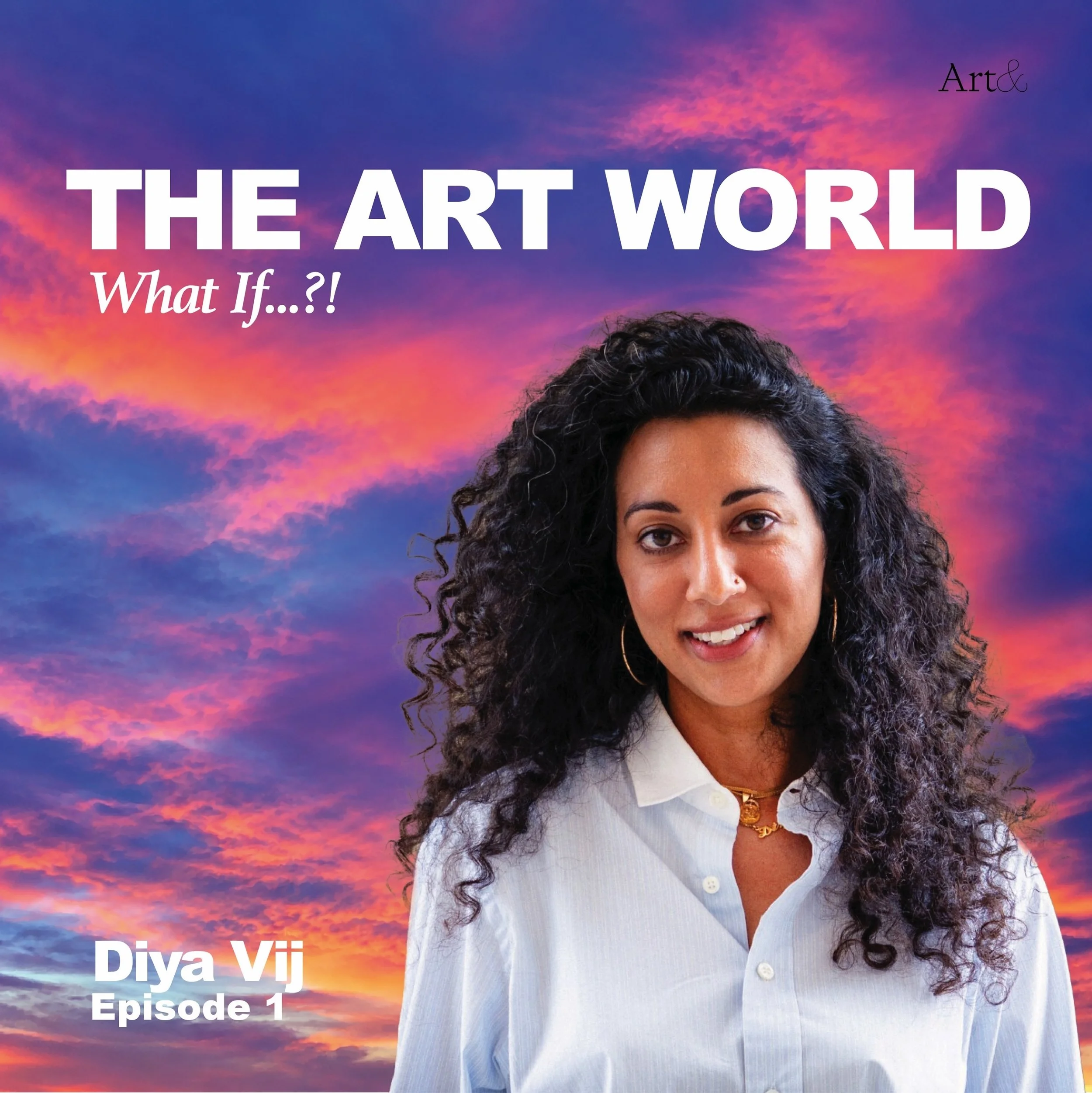
As New York City's Commissioner of Cultural Affairs, Diya Vij is overseeing the largest cultural budget in the city's history. But for Vij, money is only one lever. Others include policy, political influence, and the reach of an entire city government.
In this episode of The Art World: What If…?!, Vij talks to host Charlotte Burns about money, power and politics; why cultural institutions have become so afraid of taking risks; and how the new Mamdani administration hopes to turn radical ideas into real change.
From affordable studio space and direct funding for artists to rethinking how cities measure the value of culture, they explore what it would take to build a city that truly works for its artists.
Tune in wherever you get your podcasts. Follow us @schwartzman.art for more, and subscribe to our Substack at artandschwartzman.substack.com.
Find out more about The Art World: What If…?! at schwartzmanand.com/the-art-world.
Transcript:
Charlotte Burns: Hello, and welcome to a new season of The Art World: What If…?! I’m your host, Charlotte Burns.
[Audio of guests saying “what if?”]
We have a brilliant lineup of guests for you from across the art world and beyond. They’ll be talking to us about everything from people to politics, dinosaurs to AI. At a time of uncertainty and upheaval, we’ll be exploring new possibilities for art and for culture because even now, there are plenty of reasons to be hopeful and new ways to imagine what comes next.
Our guests aren’t just imagining change; they’re making it happen, and they’ll be telling us how. To kick things off, we’re asking: What if we could build a city for artists?
Our first guest is Diya Vij, New York City’s Commissioner of Cultural Affairs. She’s asking some big questions about what a city can be and the role artists should play in shaping it. With the largest cultural budget in the city’s history, Diya has an extraordinary opportunity to turn ideas into action.
But at a time when artists are being priced out of New York, how much can government really create change? We talk about money, about power, about politics, about why cultural institutions have become afraid of taking risks, and about what it would take to build a city where artists can truly thrive.
Can New York become a city that really works for its artists? Let’s find out.
The Art World: What If…?! is brought to you by Art&, the editorial platform created by Schwartzman&. Welcome back.
[Musical interlude]
Charlotte Burns: Diya, thank you so much for being with us today.
Diya Vij: Thank you for having me.
Charlotte Burns: It's such a pleasure.So Diya, you're six months into the role now. What, so far, has surprised you the most? What's been the hardest thing, and what's brought you the most joy?
Diya Vij: Well, I will say that this is not my first rodeo. I worked at the Department of Cultural Affairs about 10 years ago, so I came in very familiar with not just the day-to-day operations, but the kind of scale and the nuance and the who-does-what and the how-we-talk to City Hall. I kind of came in knowing all of those dynamics, which if I didn't, this would be incredibly overwhelming.So surprising, I think the biggest thing that I knew, but it feels really different in my body, is the pace. The pace is really fast, and the breadth is really wide of the kind of things that come through my desk.
In terms of the conditions that artists, cultural workers, cultural organizations are facing, I have to say that's not surprising. It's something that I knew very well also coming to this job, being a curator, and working in various parts of the New York City art ecosystem. So, that is not surprising.
It's the kind of way in which we're able to address it, or the pace in which we should move to work, that is the kind of newest thing for me, I think. And it is a little counterintuitive when you think of government; you think of slow, but we move really fast, in a kind of like hurry-up-and-wait kind of fast.
And I think the thing that brings me the greatest joy is that this job is a great privilege. It's a huge responsibility, but it's a great privilege, and I am constantly meeting people who have dedicated their lives to art and artists and public science and gardens and botany and the kind of range of things we do here at Cultural Affairs in every scale, in every borough, in every neighborhood, and it's a privilege and a deep joy.
Like, truly.
Charlotte Burns: When you left the Department of Cultural Affairs, the then commissioner, Tom Finkelpearl, told you that the best thing to do would be to work in the public sector, then the private sector, then come back to the public sector. And at the time you said, “There's no way that's gonna happen,” but here you are.What did you learn on the outside that you couldn't have learned staying inside the public sector? And what was it about the [Mayor Zohran] Mamdani administration that tempted you back?
Diya Vij: Yeah. Well, Tom has a way of being right quite often, so I've learned that lesson. I learned... Well, I think when I left city government last time, I was also a different person. You know, I was in my very early 30s, and we were just in... I left in 2018, so it was the first two years of the first administration of Trump. It just felt like I wanted to be able to work directly with artists on things that really challenged our political conditions. I really wanted that freedom to work with artists on their big visions without compromise. What I learned through that is all…is, like, how powerful that is, how necessary that is, how much space we need to be giving artists to do what they do, right? To really metabolize the conditions of the world and present them back to us in new languages and other ways of looking, seeing, talking, writing. We need that, and we need a lot of that. And I learned how incredibly difficult it is to do that, both as an administrator, curator, and as an artist for so many reasons.And when Mayor Mamdani began his campaign, I, like most of the city, was like, “Oh, this is…Is this gonna work? Will he actually become mayor?” And it was an amazing shock that he won by such a landslide, right? It was an amazing shock that that kind of change could be possible in government, that we could have somebody who I felt so politically aligned with, who was unapologetically naming the conditions that we're living in and building something positive out of it, like presenting a new vision for what other ways we can live together.
And I just felt really energized that if ever a moment to make these big changes or to think really structurally, it's now. This would be it. And I really do not think I would do this for any other mayor.
Charlotte Burns: You said that the mandate to address the affordability crisis is both visionary, but it's also deeply operational. I thought that was really interesting. How are you approaching straddling the imagination and the machinery necessary to move things on a kind of everyday basis, thinking about all the things that you want to achieve?
Diya Vij: I actually think Creative Time is, like, the best training ever for that kind of work because when you're working with artists to produce these big commissions, and it takes so many entities outside of yourself to make it happen, like working with various city agencies or sites that aren't yours or privately owned. There's all kinds of constraints, but you are responsible solely for taking that big vision and breaking it down into all the pieces that it needs to take to get to the finish line. So I think having a producer's mind is actually the best training for something that is both visionary and operational; Like, you really have to think about things that make no concrete sense and put them into the most finite details of how to move them through space. And so that's just, like, a skill that I have developed over time.And even last time I worked at the Department of Cultural Affairs, we were working on the cultural plan, Create NYC, the first strategic plan for culture in New York City, and it was doing so much listening, synthesizing, thinking about what levers we have at our disposal and what was possible to pull, right? And, taking those, like, what does this feel like for people in their day-to-day lives, and making that into policy recommendations.
So, that's a muscle I feel like I've developed over time, but I think it is that precise combination of being a city worker and also being a curator, producer that, like, makes that feel possible for me.
But it is. That's how government works, right? You're thinking really big picture. You're thinking about what are we doing to make people's lives easier, and I think if you're doing it well, you're thinking about those on the margins and designing policy for them, and how does life get easier for them, and then theoretically it gets easier for everyone else, right?
And then you have to take that really big picture and put it through all of the operational mechanisms within city government, which are vast, which are deep, which are complicated, and that's how you make it happen. And the devil is in the details, so you have to really understand the mechanics.
Charlotte Burns: You talk about listening; you've been on a six-month listening tour asking questions including “what does a city built for artists look like?”, and “what does a city built by artists look like?”Can you tell me a couple of the things that you've heard that you can't stop thinking about?
Diya Vij: Yeah. I mean, we've heard so many amazing ideas, and some are programmatic. We heard from an elder artist recently in Brooklyn that when people think about what older aging artists need, they're offered workshops, free training, and she said, “I've been doing this for, like, 30, 40 years. I don't need classes. I need affordable workspace just for aging artists. I need to just make my work.”And it was so simple, but, like, so true, right? Maybe actually we've been designing wrong, right? And it also kind of showed that there is a need and a desire for community around aging in the arts that's, like, totally built by artists, that's informal, where those social relationships are fostered and made by each other, right? And we just need to give affordable space, and the rest will happen. So, that was a cool thing that I loved hearing.
Somebody at Performance Space suggested that we do a kind of artist-led artist census of New York City just to understand, like, where do artists live? How are they making a living?
I think something that I've really learned over my career is that there's a too-small group of people in our field that understand city government's relationship to art and culture. What we should be doing, what we have the opportunity to do now, is really expand who's engaged, who's speaking with us, and helping us shape those policy decisions and building our city together.
And so I really loved that because it's also an invitation, right, for us to go wider. It's really, once you start tapping into the conferences that people go to who are embedded in this field of advocacy in art and the public sector, like it's can be quite insular. And what I know from working in cultural organizations of all scales is that most people who work in our field don't think about this or don't even know what's available, and that is something to fix, I think.
Charlotte Burns: It's really interesting because you're reminding me of one of the key findings in the survey that we did with Anonymous Was a Woman, which is of course, founded by an artist, Susan Unterberg, and run by another artist, Gaby Collins-Fernández. And working with them is so interesting because they're two artists doing something for artists, which is looking at what women artists need, which is women, trans, and non-binary artists.And the key findings are, like you said, really simple. Artists want time and space, but especially community. And they felt that their community with one another was really the most important thing to their career. They wanted more opportunities to be together.
It was really interesting, too, when you broke it down across ages and across race to look at who had access to what, what time and space meant to different people.
When you were in the department ten years ago, you tried to embed diversity and equity initiatives into the levers of government. What have you found about sustaining and embedding those kinds of initiatives and those kinds of outlooks, really, into government and thinking about culture?
Diya Vij: Yeah, I mean, it's so interesting. So, when I first started here, the Cultural Institutions Group—of 39 cultural organizations across the city that are in city buildings, on city-owned land, and have this really deep partnership with the city—they were required to create DEI plans for their organization; so what that meant for staff, for board development, and for audience engagement that was really the initiative of former commissioner Tom Finkelpearl.Coming back, they were submitting their final reports from that initial plan. So, I had calls, I think, with 28 of them and got to really talk about that arc, that 10-year arc. And I will say that that actually was probably really one of the most surprising moments I've had so far. It was really heartening to speak to them about what that 10-year commitment has done to the organizations.
When we introduced this back then, it was medium popular. It was mildly popular, I'll say. [Laughs] It was, it was, um, you know… It was put on to organizations to start thinking differently about their staff makeup and their board development, and what it really looks like to think about racial equity, to think about disability justice, to think about these things holistically, like 360, and that you can't get New Yorkers in your door if they're not also on your staff, right? But hearing from them 10 years later was so fascinating because so many of the processes that they were starting to put in place have actually become institutionalized.
Dance companies, for example, like, it really just takes that long because you're training dancers from a very young age; it takes that long to start seeing change on your stage.
So, what I learned is, like, that long-term, persistent dedication is the transformational change. Is that producing the results we wanna see? Are we seeing more people in leadership? Probably in some leadership positions. At the [executive director] level? I don't know. At the board level? To be determined. And of course now we're in a really different phase in a really different atmosphere with our national government coming down really hard on anything diversity-related.
So yeah, I mean, I was really happily surprised at how much of that work has become part of just, like, day-to-day operations. And I will say it really does feel like there are much more opportunities for staff voices in larger conversations around the practices of these organizations, and that's huge.
[Musical interlude]
Charlotte Burns: When you think about operating the levers of power—and you have several at your disposal now—what gets things moving? Is it budget? Is it time? Is it vision? Is it making sure that artists have a seat at the table? When you think about what it is that you need to achieve, I know it's a combination of all of these things, but when you think about moving those levers of power, what are the ones that seem to be the most effective?
Diya Vij: Hmm. All of them together. Like, it really is not one singular tactic, right? It's like budget absolutely is a really necessary, powerful tool. We are the largest municipal funder of arts and culture in the country. We're actually bigger than the [National Endowment for the Arts] NEA. That's really important, and that is really five boroughs and very spread out, and putting a lot of attention on increasing equity in that, and thinking about neighborhood development through the lever of our budget, and what it means to kind of create resilient neighborhoods from a perspective of arts and culture is really important.
But the budget is just one piece of that. There's all kinds of other policies that do that, too.
So when we're working in collaboration and partnership with our city colleagues in housing, in city planning, at the Economic Development Corporation, those are really important levers for us to activate also.
And then there's influence, right? There's what we say is our priority and how we design different kinds of programs. We've done a ton of ticket giveaways. We just gave away 70,000 tickets to the Met Opera, or announced that we'll be doing that for this year, to Under The Radar for teens going to performances. That access, removing that financial barrier for New Yorkers to access arts and culture so we can build that next generation.
Because it's not just artists and cultural workers that need time and resources and space, right? It's all New Yorkers. What the affordability crisis means for everyone is that, like, time is a scarcity, and resources to do the parts of life that are joyful, that are about pleasure and connection and creating relationships, is a scarcity.
So, we have to start to change that, right? We have to give people back their time, and when they have their time back, they have to be able to engage in what makes our cultural life in this city. That's the reason why so many of us live here.
So, doing those kinds of programs also is a signal, right? It's not just that we are really excited to collaborate in this way, which we are, but we're also saying—and I'm saying explicitly—to these organizations that I think it's an existential threat to put barriers of access between what cultural organizations are doing and the audiences of New York City, because we will not have a field in the future if we aren't building those audiences right now.
So, there's a lot of levers. There's a lot of different levers to pull simultaneously, and those even are just a few. But I think the way in which we are connected to all of city government is probably the most powerful piece of our work that we really are thinking about tools in an all-of-government way, not just within the Department of Cultural Affairs.
Charlotte Burns: Is there a particular department that you have on speed dial?
Diya Vij: Well, recently I've been working a lot with the Department of Design and Construction Commissioner Paul [A.] Ochoa. I also am not sure if many people know this: New York City has a really unique and incredible capital construction budget for cultural organizations. So, we just this year alone, just this administration, not including City Council or the borough presidents, allocated $135 million to cultural construction in New York City, and that's everything from, like, a full renovation to a new roof or a new boiler, and these, like, really kind of essential infrastructural upgrades.And if you're not on city property, or if you are, when you get this funding and you go through a capital project with us, you put your organization into a restrictive covenants for culture. So that means no matter what happens to your business, that space is long-term allocated for culture as a public good to New York City. So like there's a really awesome mechanism in there for that.
But as, you know, we all know, city construction takes a long time and is expensive. And so Commissioner Ochoa and I have been like, we had a hearing from city council, a joint hearing on his third day, my maybe second or third week. And since then, we have just been in deep conversation, going through every part of all of the complicated different processes that cultural organizations go through to do this work, to figure out where do we shape time, where do we streamline, how do we make this more cost-effective, better for organizations so they don't have to close their doors for long? Like, how do we just improve this process? So, he's somebody that I'm deeply in touch with.
And what's also really amazing is that if you have the capacity as a cultural organization, you can manage your own project if you come with 50% of the funding privately matched. But most don't have the capacity to take on projects like this, so the city does. The Department of Design and Construction manages it. They see it through from start to finish. So it might be long, but it is like an incredible resource.
But yeah, that is like a very wonky example of something we have been, like, deep in the weeds on.
What's really exciting about this administration is that we are under the portfolio of economic justice, so we are under Deputy Mayor Julie Su's portfolio, and it's the first time the city has a Deputy Mayor for Economic Justice. What that means is that we, with our colleagues in that portfolio especially, but kind of across city government, it's like we get to think of other metrics for understanding our economy.
Like, just because the economy is booming doesn't mean workers are having an easier time here. So, why is that? What are our new metrics, and how does art and culture fit into that?
Charlotte Burns: That's so interesting because we've been through this 25-year period where the metrics of success for cultural organizations have been kind of real estate driven to some extent. They've been your attendance levels, which I'll never forget Okwui Enwezor calling “voodoo economics” because they're not necessarily counted in the same way. There isn't a field standard, and can be used against you.So we have attendance as a metric of success, and we have obviously expansions and, you know, major capital projects. And a lot of museum people and cultural organization people and nonprofit people that you talk to aren't necessarily happy with those metrics because they don't…
Diya Vij: Mm-hmm.
Charlotte Burns: …reflect the broader scope of work that they're trying to do. And also over the past, however many years, when you go to, whether it's the opening of a museum or the opening of the [Park Avenue] Armory, you might hear a mayor talking about how many workers have been employed on construction or how many union crews did X or Y, or how many taxi drivers were employed for the people flying into town. And so culture has been explicitly linked to economic growth through a kind of event economy.Diya Vij: Mm-hmm.
Charlotte Burns: Do you see that continuing under this administration, or do you see a different kind of metric alongside or in place of?
Diya Vij: Yeah, I mean, I will say that those metrics are really important, especially when we are talking about union workers, right? And, like, jobs that are working class, middle class jobs that are activated through that kind of event-based art economy. Those are really, like, tourism-generated economic metrics.And while that's important, that is absolutely just one piece of it. We, under Commissioner Tom Finkelpearl, commissioned the Social Impact of the Arts study, which was done by the University of Pennsylvania. They're about to come out with their next study, ten years later, and they did this deep analysis of nonprofits that have cultural or art programming in New York City.
And when they say nonprofits, they just mean anyone that's not making a profit doing this. So, like, artist collectives, super grassroots organizations to, like, you know, a big established nonprofit. So the data is very dense, and it captures a lot of the field and the ecosystem.
And what we learned, which we already knew in our bodies and our hearts and our minds that, but then we got data to back it up, is that just the presence of art and culture in a neighborhood correlates to all kinds of incredible outcomes in health, in education, in safety.
Because what it does is create a different kind of social cohesion or a different kind of social connection between neighbors, between artists and community, you know, between people that wouldn't maybe normally be talking to each other and meeting each other, and what they're doing is gathering around ideas.
And I think a metric that I would really like to be introducing and having us think about is, like, what does it mean? What is the actual tangible impact of us creating the infrastructure to be a learning society? How do we refocus so that the ideas are just as important as the attendance and that kind of direct economic outcome in tourism?
Charlotte Burns: So that the economics are one strand, not the only strand.
Diya Vij: That they're not the only strand.But there also is an economic argument, right? Like, if you have better outcomes in health, safety, and education, there is an absolute economic advantage to that, right? If we're investing in people's ability to be curious, to learn, to have fun, to come together, like, throughout their lives, that will lead to an economic advantage.
[Musical interlude]
Charlotte Burns: You said, when you came into office, the budget was looking like it was facing a funding cliff [with] around $216 million, was penciled in for this year, compared with around $300 million in the previous year. But your first budget ended up being the largest in the agency's history, $323.8 million. So you went from a prospect of cuts to record investment. How did that happen? What are New Yorkers gonna see that's materially different?
Diya Vij: Yeah. Well, I will say that the way the budget process works is that it's always kind of that way, right? If you compare January and January plans, or if you compare, like, the month to month, year to year, like we actually were not facing a cut. That's just the budget process.But we were incredibly pleased with the outcome, of course, and I think what… and I hope what it shows to New Yorkers is that this administration, from the mayor to the deputy mayor to the commissioner and beyond, is really invested in arts and culture as like a pillar for life in New York City, that it's like really essential.
And it was an incredibly, and it continues to be an incredibly difficult budget and deficit that the city is facing. You know, the budget director and the mayor and the first deputy, like everyone was able balance the budget while preserving these essential services. And I think it's really meaningful that arts and culture are considered one of those essential services to New Yorkers.
Charlotte Burns: I've been really struck in recent years that we're in a moment where culture is back on the political agenda in a really strong way, but notably more so with right-wing governments. Like the [Alternative for Germany] AfD in Germany…Diya Vij: Hmm.
Charlotte Burns: …has put culture at the center of its plans if it were to gain power. Obviously, in America, you have Trump appointing himself as chair of the [John F.] Kennedy [Memorial] Center [for the Performing Arts], and you have the [National] Garden of [American] Heroes, and the executive order around the Smithsonian.It's really interesting to see in New York this kind of central focus on culture and what culture means in a socialist administration. And can you talk a little bit more about that, what you think that does? It's kind of a ‘what if’. Like, what…
Diya Vij: Mm-hmm.
Charlotte Burns: What does that mean for culture? What if culture is essential, and what does it say?
Diya Vij: Mm-hmm. I mean, I think we know it is essential, or we know that culture is essential to political projects, and that is across the political spectrum, that we can look into historical examples across the world, across time. Like, it's important. It is, it plays a part. It's how you wield it, right, and what your long view is and what the outcome is.I think, yeah, what we're seeing in these kinds of right-wing governments is, like, full control, right? Or full control or pushing a particular political agenda through art, and more importantly, distinguishing another kind of political project through art, right? Or really being equally heavy-handed in saying what is now censored or what is now dangerous or what is now allowed.
And that piece of it I'm really fascinated with is the danger part of it, right? Because it goes to show how important the work of artists is, that having places where ideas can be really teased out when they are not yet palatable to the masses becomes a danger to the state often times.
What I am really interested in is, like, we've felt that over the past few years here in this country. We have been feeling that. But I would say in the past three years, we have really seen what it looks like for artists to live through a culture war, for our organizations and administrators to be living through a culture war. And that is both from the federal government and it is also from industry.
And I do believe that a robust cultural policy that enables art to be flourishing on a neighborhood level is an antidote to that; it helps to diffuse some of that power. That more ideas, more spaces for artists to be able to make together is how we diffuse some of that power.
So, I do think maybe along that spectrum is a consolidation of power versus a diffusing of, a spreading out, a creating the infrastructure where we empower the workers, right? We empower the artists and the cultural workers to have a myriad of ideas, to put forth all kinds of aesthetic propositions, all kinds of political propositions, and we let people be in that kind of dialogue together.
Charlotte Burns: You said earlier in the show that when you left government, you wanted to go and work more directly with artists who were more politically engaged. I was thinking of the project you did with the New Red Order for Creative Time. And the MoMA curator Thomas [T. Jean] Lax said of that installation that you were able to do something that few other arts organizations would have dared to do because of fear.As I was prepping for this interview, the word “fear” came up quite a few times, whether it was that kind of landscape of fear that institutions were in or this idea of there being fear. And I wondered what it was about you that made you feel able to just tackle that head-on and do things that maybe other people felt they couldn't do or didn't want to do in those moments, that made you go towards that.
Diya Vij: I mean, this is gonna sound so wild, but honestly, working for city government when I was last at the Department of Cultural Affairs, I felt—and I was a [District Council] 37 employee, I was a civil servant title—I felt really empowered and very safe to be political in my life outside of work.I would leave here often and go to [Black Lives Matter] protests with other colleagues. I felt a kind of political freedom that I didn't feel in cultural organizations, to be honest. And that really drove me to think really critically about fear and risk. What is the actual risk of this?
Is it safety? Is it physical safety? Is it a reputational risk? Is it a financial risk? Like, where is the risk, and what could be the potential reward? And if the reward could be really great, how do we mitigate for the risk? Is just how I have been approaching it.
And I also knew very well that I was stepping into an incredible legacy of Creative Time, that for me some of my most formative art moments as a young person was through Creative Time, and specifically the Creative Time Summits.
It's where I understood that the intersection of art and politics was deep, could be explicit, just as much as it could be subtle, global, and really active. So I kind of took that as my mandate when I got to Creative Time: that we are doing things that are big, bold, unexpected, and deeply engaged with current events and what we are experiencing currently. And we are mandated to take those risks because that is what Creative Time does in the landscape of public art and the art ecosystem as a whole.
Which is why it's so important that we're investing, across the board, so that there are those spaces where that risk is possible, right? Where artists can take it, where workers can take it, where New Yorkers and visitors can experience it.
But for me, it was never really a question. I was the curator at Creative Time. I was meant to understand what that legacy looked like today. And for me, that was working with really great artists who are trying really different ways to have really meaningful and maybe radical political conversations, you know?
And it's always, too, for me, about the form, and I think New Rad Order is so genius because they're so smart about their aesthetics. They're so rooted in video history. They're so funny. Humor is such a tool for them. They're always, not only just, in the ideas that they put forth, but in the forms that they take, are so deeply rooted in both an art history, in an Indigenous history, and in a political history that they were absolutely the correct artists of the time to work with.
Charlotte Burns: That's really interesting what you say about the cultural sector being much more conservative when it comes to risk, and in essence, what you're saying is supporting artists more than other sectors, notably the government. I don't think the cultural sector likes to see itself that way.
Diya Vij: Mm-hmm.
Charlotte Burns: You're talking about 2018, and I think it would be fair to say that the cultural sector's become more conservative since then.
Diya Vij: Agreed.
Charlotte Burns: You know, from the position you're in now, what levers can you pull to encourage more risk-taking for organizations?
Diya Vij: Yeah. I think there's a few different ways to approach that. I do think that the affordability crisis, the cost of doing business, and the models that cultural organizations, the financial models, that they rely on make them precarious financially, right?And in this moment in particular, when tariffs go up, when inflation is going up, when the cost of things is getting harder and higher, any risk feels like the possibility of closing the doors, right? Like, that financial precarity leads to conservatism.
I think that an increase in public funding actually is one of the best tools that we have to figure out how we stabilize the field to take some of that pressure off, to be able to take those risks.
And again, it's about kind of diffusing where that money is coming from, right? Or being able to say that there is another source of stability within your financial map.
And then I think it's just the influence. This is, like, the influence part, is that I think— and I say this to every organization that I go to visit—I think that what we have lost in the past 10 years in this affordability crisis are the small and mid-size organizations, the artist-led organizations that are the places where artists can really experiment.
We still have many, many great ones, and they're wonderful and have my support however possible. But what we lose is that ability for artists to actually take those risks. So what I hope they're hearing from me is, like, more of that. Otherwise, what is the art system, ecosystem, industry that we're building for tomorrow? Like, what is it if we're not actually giving the space for new ideas, and ideas that are not yet, like, popular? Like, where is that?
Charlotte Burns: Yeah, what's the greater risk?
Diya Vij: Mm-hmm.
Charlotte Burns: I guess it goes back to your point about the long-term, you know, medium-, long-term view, rather than the shorter-term view.
Diya Vij: Yeah.
Charlotte Burns: What changes when the government starts thinking about the artist as a worker?
Diya Vij: Hmm. For us, everything because… or I wouldn't say everything, but for us a lot because historically and currently the Department of Cultural Affairs is focused on 501(c)(3) nonprofit organizations that offer culture and art to the public. That is how our funding policies have been driven. So when we start to think about individual artists, what it does is open up a whole new wing of policymaking for us, and the way that we reach individual artists is through our local arts councils, and so through the Borough Arts Councils.And just recently, the mayor and I announced that we're doubling those grants, the amount of money to artists from $5,000 to up to $10,000. They haven't been increased in almost 20 years.
Charlotte Burns: Did you guys increase the pot or just the size of the grant?
Diya Vij: We increased the size of the grant, and over time we'll increase the pot. But what we're learning is, or I hope, I mean, I hope that I'm able to do that. But what, you know, what we know is that $5,000 is, like, not enough for an artist to make a project, right? And it's not enough to have a kinda material impact on your financial life. And it was just not working.And so this is also a move to understand that impact is depth. It's depth of investment and consistency, and it matches the times more.
So really excited to do that as step one of what it looks like to really start thinking about artists and empowering artists just as much as we think about cultural organizations, who are obviously such a core component of the ecosystem.
Charlotte Burns: But what is step two then? If that's step one, what's step two?
Diya Vij: Stay tuned. [Laughs]
Charlotte Burns: [Laughs] Stay avidly tuned.One of the things we spoke about when you and I last chatted was about the possibility of using the industrial space that's already under the control of the New York City Economic Development Corporation, and possibly thinking about using that for affordable studios. You said at the time that “that was a tool in our toolbox that we will be exploring, amplifying, and enhancing.”
While other US cities have created more than 2,800 dedicated artist housing units over the past decade, New York has created none. Obviously, artist housing is different than studio spaces. But I wanted to ask you about what developments, no pun intended, there have been around this idea of rehabilitating that industrial space that you can maybe access through city government for artists and other creative workers.
Diya Vij: Yeah. We are working really hard to figure out what that looks like for us moving forward. But I will say that there's already some really great examples of build this way. Like Sugar Hill Children's Museum [of Art & Storytelling] is in an affordable housing unit.When we start to think about how we integrate culture, and including artist workspace, into rezonings, into new developments, into neighborhood planning, then we can start to build scale into the future. For right now, we are looking into, like, what are those existing spaces that are vacant, that aren't being activated. And we have a program at the Department of Cultural Affairs, Create in Place, that works with both artist collectives and cultural organizations who are at risk of losing their space, and really does a lot of this, like, quiet behind-the-scenes work of saying, "Could we put you somewhere else?”
I will say, to the artist housing piece, I think what a lot of people don't know that, I think is amazing, is that New York City has one of the strongest human rights laws in the country. It says that we can't discriminate against profession, right? And so, for unlocking artist housing, it requires a change in the law. But what we also know is that when that door opens, the profession that's most persecuted against are lawyers because a lot of buildings don't want their tenants organizing.
So I like to think about the artists in coalition with other workers, other low-income workers, other middle-income workers, and like, what is the city we're trying to build together, and how do we uplift each other along the way?
And so increasing affordable housing stock across the city, making it easier for artists to apply and get those because they have a different kind of financial history, right? Or the way they mark their income might not look like a worker with a W-2 [Form]. How do we make it easier for artists to access those?
I think that is the kind of city and coalition that's pretty exciting.
Charlotte Burns: So, when we talked about matching up the deeply operational with the visionary, that's part of the deeply operational that we need to think about.
Diya Vij: And it's visionary, right? Because it's like, what is the society we're building and why? And I love artists. I've dedicated my whole career to them, right? But when we are exceptionalizing one group of people, why?
Charlotte Burns: I think that makes sense if you're… you know, artists are workers then, it, on the one hand changes things. Well, like you were saying, it's a different way of thinking about what art is and also how, I guess that's what I wanted to ask you really, is a simpler way of saying it.Like, what happens if you think of an artist as a worker? You sort of talked about what that meant in one way, but in the other way, it is what if you stop exceptionalizing artists, and seeing artists as another core worker.
Diya Vij: Mm-hmm.
Charlotte Burns: That's sort of the reverse of that in a kind of helpful way.
Diya Vij: Yeah. I actually like that there is no easy or clean way to think about art practice as a labor practice. Like, in so many ways it breaks the logic of labor, like trying to figure out the hourly pay rate, the structures of what it looks like to quantify and qualify workforces.They don't really fully work when you think about the work of an artist, and I kinda love that. I kinda love that we are always up against where we're trying, and meaningfully making material impacts in the lives of artists, but that they're always kind of reminding us that these structures are flimsy, right?
And that, like, maybe, like, work in general is something we should be questioning all the time, and that labor in general is something we should always have a lens towards unpacking.
And I like that artists and art, like, do those two things at once. They, like, make us contend with what we have now and really have to think about what's beyond that.
So there is a little bit of a danger, I'll admit, to saying artists are workers and, like, that's the only lens we look at them through, because we know art does all kinds of other stuff too, right? And that will never fit neatly into that model.
But that's the tension. That's, like, the tension to hold, and I kind of like that we are forced to.
Charlotte Burns: Yeah, that tension just sort of pushes new propositions.
Diya Vij: Mm-hmm.
[Musical interlude]
Charlotte Burns: When we last spoke as well, you talked about maybe building coalitions across industries. You were asking the question of how the city could work with private real estate to create those inroads and other kinds of partnerships. What would you ask the real estate sector to do to help artists?
Diya Vij: Yeah, and this also exists, and I can point to other examples in the city now in which private real estate does work with the city or with individual artists or organizations on integrating space, like IndieSpace, like BAM's new [Rose] Cinemas, and [The Museum of Contemporary African Diasporan Arts] MoCADA, and 651 ARTS in Downtown Brooklyn. There are a lot of examples of this.But I think what I would say to private real estate is to think about two things: what is actually affordable, and what is actually long-term? Because I think what we often see is that integration happening in the beginning when a building opens, and it disappearing after five years, because at some point those spaces have to be market rate.
So what does it look like to think differently also about that financial model? What is long-term affordability, and are we all thinking together about generational impact? It's back to that kind of time horizon, too. Like, what is the city that we're building together, and are we in it together actually?
Charlotte Burns: Mm, I love that.New York's resident artist population has fallen 4.5% since 2019. It's the first sustained decline in decades. Six months in, what have you learned about what it takes to reverse that? Do you think that New York has been taking its artists for granted? And what does it take to keep artists and other creatives in the city?
Diya Vij: This entire administration is trying to address that, right? Like, artists are leaving the city, you're right, up 4%; for dancers it's almost 20%. It's really a serious crisis. We have also seen over 200,000 Black people leave New York City, right? There's a lot of leaving New York City because it's unaffordable, and a lot of people that have had lives here generationally.So it's a crisis across the board, and this all-of-government approach is really that intervention into it: is the citywide housing plan, is the largest cultural budget, is thinking about artists as policy for us. Like, all of this all-of-government approach is how we are trying to address the affordability crisis: public grocery stores, transportation that's more affordable. Like, all of that will help artists too.
But that's the thing that's, like, both fast and slow, right? It's like you have the ideas right away of, like, what the kind of system interventions we need, like increasing affordable housing stock, and then it just takes the time that it takes to see it in the world.
That's the kind of pace of government that's really interesting to me, is we're working really fast, and the outcome might feel really slow.
Charlotte Burns: Mm.
Diya Vij: You know? But that's what it means to work at scale, right? And there's, like, very few jobs in the world where you can think at this scale about art and culture, and that's the kind of trade-off, right? It's, like, fast and slow.
Charlotte Burns: Do you ever switch off?
Diya Vij: I'm learning. I am learning if, and how, and when that's possible. [Laughs]But yeah. I'm somebody that needs, like, to turn off. I do need to turn off and watch really bad TV for a really long time. So I try to do, like, at least half a day where I do nothing. I do, I call them my “do nothing day”.
Charlotte Burns: I was gonna ask you what your influences are now. I read a great quote where you said, "As a Gemini rising, the melodrama of Bollywood was probably the first thing that really piqued my interest." But then that you entered art through books and stories like Gabriel García Márquez's One Hundred Years of Solitude, James Baldwin's “Sonny's Blues”, and Toni Morrison's Beloved. So I was gonna ask you your cultural influences now, but I'm wondering if it's a bit like a busman's holiday that you actually just need to dive into really bad television.
Diya Vij: I do, yeah. That melodrama piece has come back full swing. If it's a dramatic reality show, I'm in.[Laughs]
But I have been, I've been trying more and more to see more art. It's actually kinda hard to do in this job. But, I am trying because it's where I get filled up. It's how I get new ideas and where my thinking comes from. And yeah, I keep trying.
And what's cool too about this job is that now I go far beyond the visual arts. I'm seeing a play at Playwrights Horizon this week. I went to an Alvin Ailey [American Dance Theater] rehearsal. Like, I really get to see much more than I was able to, discipline-wise, previously.
Charlotte Burns: Where do you think the greatest innovation is taking place? Which part of the cultural scene?
Diya Vij: I mean, I think there's innovation happening everywhere, and I've been like… And I've always kind of found it in the spaces where it's in progress.I went to a play a couple years ago in a friend's backyard that was one of the best things I've seen. It was like a really simple but beautiful, hand-painted set with like pulleys that came up and down. It was a backyard of like a brownstone building with maybe like five apartment units in it. And that kind of making that like, I just, we just have to make, no matter what space we're given, is where I think the most innovation happens. And people really coming together across disciplines.
I think that's also why I have such a deep respect for nightlife. That's like where dancers, DJs, musicians, where like all kinds of artists come together in like informal community that leads to all kinds of making outside of those spaces.
So for me, innovation happens in the places where artists can gather together and make something on their own terms.
Charlotte Burns: We talked a little bit about metrics. Going into this job, what are your own definitions of success and your own ambitions for yourself? When you look back on it, what do you hope to have achieved?
Diya Vij: I had like a toast for friends and family and then a whole lot of other people when I became commissioner. In it, I talked like directly to my community of artists and creative and cultural workers in the room. I named a lot of them: drag queens, DJs, painters, sculptors, playwrights, poets. I kind of named a lot of people that matter a lot to me, and I made a commitment to them to be accountable to them, to artists. And if I leave here making the lives of artists a little bit better materially, then I will have succeeded.
[Musical interlude]
Charlotte Burns: I'm gonna ask you a few ‘what ifs’.You've said before that we suffer from a deficit in radical imagination and that artist organizers should be at every decision-making table. What if they were?
Diya Vij: I think we would have a lot more... There would be a lot more possibilities to think through.
Charlotte Burns: We're living in a time of innovation. Your agenda is ambitious and optimistic. It's also a time, like you said, of crisis and loss. What if we lose something we can't get back?
Diya Vij: Nothing is linear. I think we're always losing something and gaining something, and we're always looking to the past to see what comes back. And nothing is linear. Not progress, not punishment. Nothing is linear. We will get it back if it needs to come back. We'll figure it out.
Charlotte Burns: What if we gave artists the things they needed to flourish? What would New York look like?
Diya Vij: Mm-hmm. I think it would mean we would be giving neighborhoods the things that they need to flourish, and we would be preserving a really local culture, a neighborhood-by-neighborhood culture, a spirit that is the basis for joy, for pleasure, for community, for a mix of people from around the world on a neighborhood level making things together.
Charlotte Burns: What's the ‘what if’ that keeps you up at night and the one that gets you out of bed in the morning?
Diya Vij: What if I don't take advantage of this great responsibility?
Charlotte Burns: Is that both? That keeps you up at night and gets you out of bed?
Diya Vij: Yep.
Charlotte Burns: Yeah. [Laughs]And what's your ‘what if’? What's the ‘what if’ that motivates you? What are you thinking about right now?
Diya Vij: What if we can build the city we deserve?
Charlotte Burns: I love that.Diya, thank you so much for being our guest on our first episode of this new season of The Art World: What If…?!
Diya Vij: Thank you so much for having me.
Charlotte Burns: It's been a joy. Thank you.
Diya Vij: Truly.
[Musical interlude]
Charlotte Burns: Many thanks to Diya for such a fascinating conversation and for kicking off our new season in such style.Join us next time. We’ll be speaking to the extraordinary Colombian artist, Doris Salcedo.
It is no exaggeration to say that she is truly one of the greatest artists of our time. Her staggering new exhibition at White Cube in New York includes House: it’s a monumental sculpture made from human hair.
Doris Salcedo: I guess I have to say that I’m a gambler. I feel that with each single work I gamble my life.Sometimes the making of a work is like going through sickness or an extreme trial on a daily basis. Walter Benjamin said that he finished his days of work with the feeling of failure sitting on his shoulder, and I feel exactly the same thing every day.”
Charlotte Burns: Join us for show. You won’t want to miss it.The Art World: What If…?! is brought to you by Art&, the editorial platform created by Schwartzman&. Production and sound design by Tamsyn Kent. Research by Julia Hernandez. I’m Charlotte Burns of Studio Burns, which produces the series.
Follow the show on social media @schwartzman.art and subscribe wherever you get your podcasts.